

How to Stimulate Collagen Production vs. Chasing Volume After GLP-1 Weight Loss
Read here to learn why rebuilding structure is the better option than chasing volume loss after rapid GLP-1 weight loss – and tips on how to stimulate collagen production.
You did the hard part. The weight is off, the number on the scale finally matches your goal weight — and then you catch your reflection in the mirror, and something looks different in a way you didn’t plan for. The cheeks appear flatter. The jawline feels softer. The face in the mirror looks tired even when you aren’t.
That’s the “GLP-1 face,” and if you’re seeing it, you’re not alone. Rapid weight loss on medications like semaglutide and tirzepatide doesn’t just shrink fat everywhere else — it takes facial fat with it, and it does so faster than your skin can keep up. Loss of facial volume causes the skin to lose the structure underneath it, while the collagen production that once kept everything firm has already been slowing with age. The result is hollowing and sagging that can arrive in months, not years.
Many turn to HA dermal fillers to replace volume lost to rapid weight loss. However, at DermaTouch RN, we’ve found a better option: stop chasing volume and start rebuilding structure.
We turn to Lead Nurse Injector Alyssa Sarmiento and Aesthetician Ashley Darbonne for their expertise. This powerful duo shares why rebuilding structure beats chasing volume, how to stimulate collagen production that changes quickly, and why timing matters.
Why Do People Turn to Cosmetic Treatments Following GLP-1 Weight Loss?
Most people don’t turn to aesthetics because they regret losing the weight. They do so because the face they see now doesn’t feel like it belongs to the body they worked for.
Facial fat is what gives the face its shape, from the fullness in the cheeks and the smooth line of the jaw to the support under the eyes. When you lose weight gradually, the skin has time to adapt. When you lose weight quickly, as many do with GLP-1 medications, the fat disappears faster than the skin can contract, which can leave skin that looks saggy and loose.
Add in the fact that collagen production naturally declines as we age, and you add rapid weight loss, and the skin can be significantly impacted. The result is hollowing at the temples and cheeks, deeper folds around the nose and mouth, and a jawline that starts to soften and sag.
Though the weight loss is considered a good thing, it can make someone look older than they are after losing weight, which is frustrating when the whole point was to feel better overall. So patients turn to cosmetic treatments to restore the structure their face lost so the outside finally reflects the accomplishment underneath.
Why Does Early Intervention Matter?
When it comes to preventing or reducing the signs of accelerated aging related to GLP-1 drugs, Darbonne points out that early intervention is key. Early intervention helps maintain a more youthful appearance by preserving facial structure throughout the weight-loss journey.
“Supporting the skin and preventing collagen loss is generally more effective and easier than [a reactive approach that requires] correcting advanced laxity after significant weight loss.”
How Do Biostimulators Help with Collagen Production?
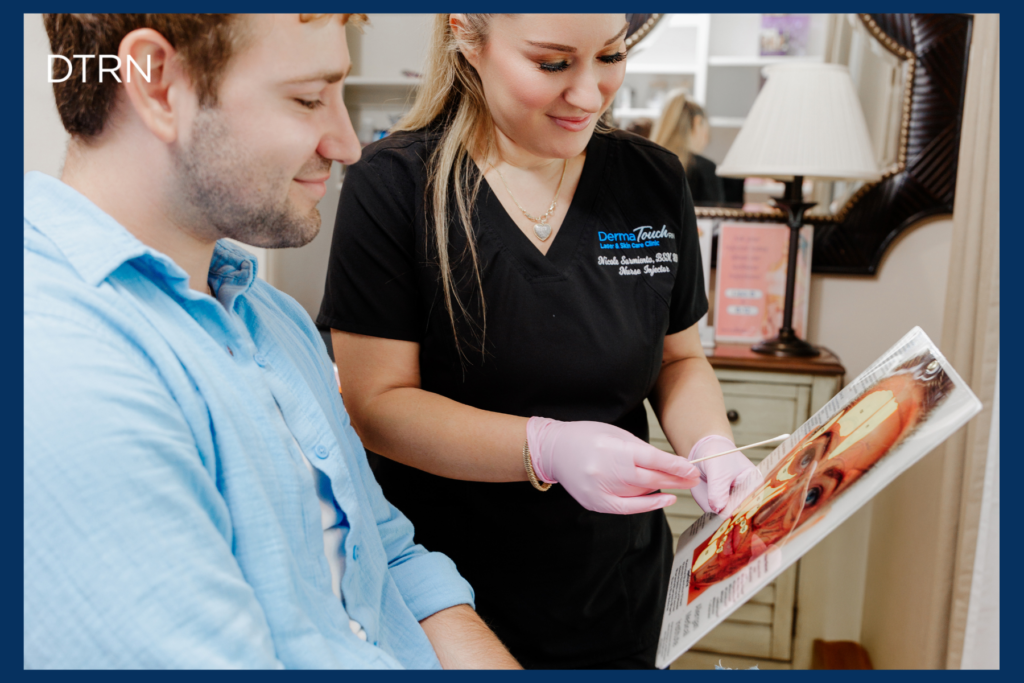
To stop chasing volume and start rebuilding structure, Sarmiento suggests biostimulators
“Biostimulators like Radiesse and Sculptra are used to counteract the GLP-1 face by treating the sagging face and volume loss. They stimulate the body’s natural collagen and elastin production by building structural integrity of the face.”
Sarmiento recommends a series of 2 to 3 biostimulator injections spaced 6 to 8 weeks apart for the best results.
What Are Biostimulators Like Sculptra and Radiesse?
Traditional dermal fillers work by adding volume directly — a hyaluronic acid gel is placed where fullness is missing, and the result is visible immediately. Biostimulators take a different approach. Instead of filling the area, they prompt your body to produce its own collagen.
Sculptra and Radiesse are both injectable biostimulators, and they work by triggering your skin’s own collagen production. Sculptra is made of poly-L-lactic acid, a biocompatible material that, once injected, acts as a scaffold that signals your body to produce new collagen around it.
Radiesse is made of calcium hydroxylapatite microspheres suspended in a gel — it offers some immediate lift on the day of treatment, then continues to stimulate collagen and elastin as the gel is absorbed over the following months. In both cases, the product itself gradually breaks down, and what’s left behind is your own tissue.
That’s why the results look the way they do. Because the change comes from your body’s own processes rather than filler that adds volume under the skin. The change arrives gradually and builds over a series of treatments, producing natural results that holdhat hold up over time.
What Energy Devices Support Rebuilding Structure?
Darbonne shares that effective treatments that improve skin laxity and target collagen production can help to address facial aging related to significant weight loss, with Vivace RF Microneedling and Sofwave being two of her top picks.
“Vivace RF Microneedling is an effective treatment for those with mild to moderate laxity. It helps improve skin texture and firmness while supporting collagen remodeling. For moderate to advanced skin laxity, Sofwave is an excellent choice. Sofwave tightens and lifts the skin by stimulating elastin, collagen, and hyaluronic acid production. To take it a step further, pairing these treatments with biostimulants can offer optimal effects.”
What Are Energy Devices?
In aesthetics, “energy devices” is the umbrella term for treatments that use a form of energy — ultrasound, radiofrequency, light, or laser — to create change in the skin without injecting anything into it. Rather than adding a product, they deliver controlled energy to a specific depth, where it creates a targeted micro-injury that the body then repairs. That repair process is what kicks collagen production back into gear.
Different devices use different energy types and reach different skin layers. Ultrasound-based treatments like Sofwave reach the mid-dermis to lift and tighten, while radiofrequency microneedling like Vivace RF combines tiny needles with heat to firm the skin and improve texture simultaneously. Choosing between them comes down to how much laxity you’re working with and where — which is exactly what a consultation is for.
Biostimulators rebuild structure from underneath, while energy devices tighten and support the skin from above. For patients navigating GLP-1 weight loss, energy devices are often the second part of the equation, complementing biostimulators.
What Is Sofwave?
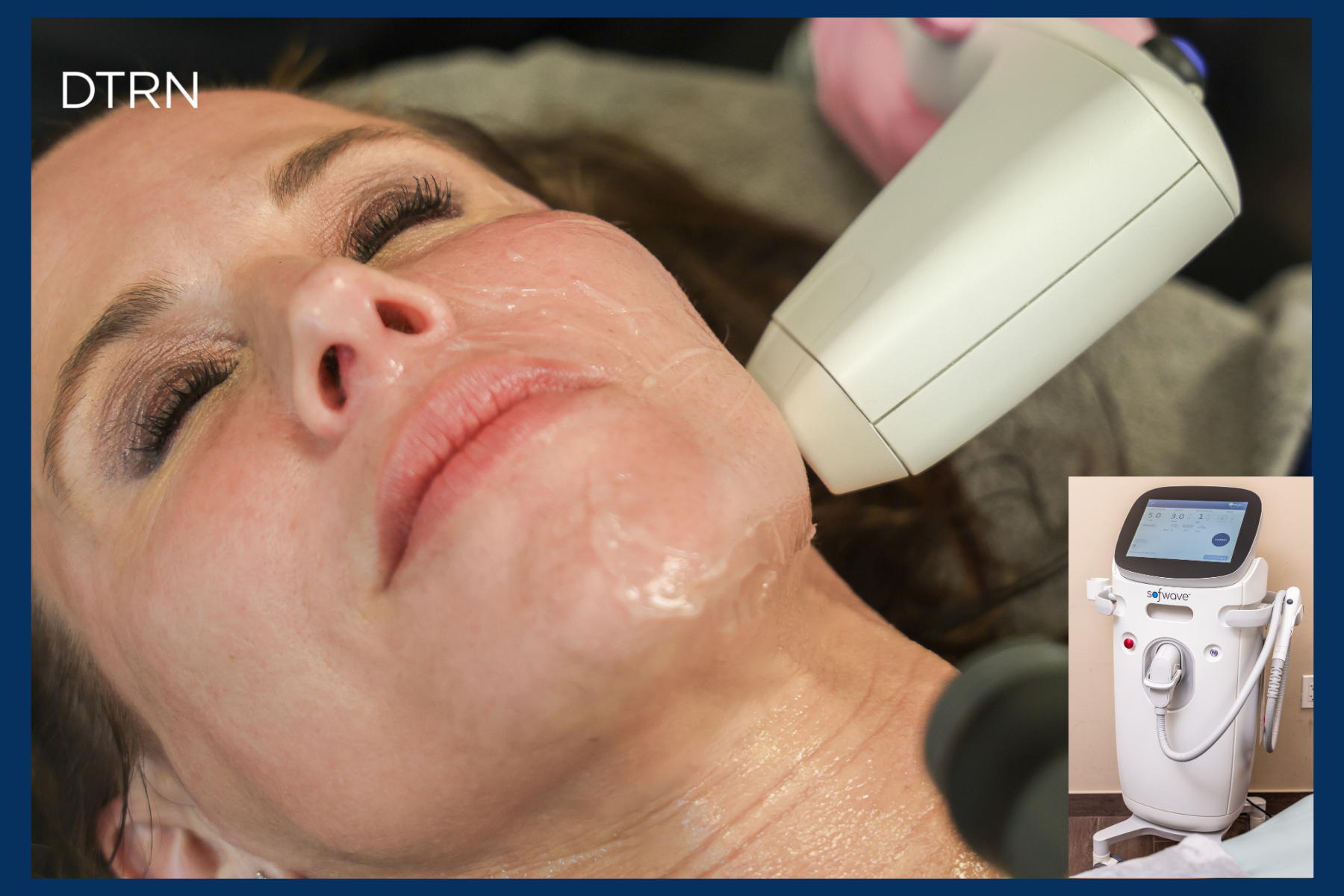
Sofwave is a non-invasive skin tightening treatment that uses ultrasound energy to lift and firm the skin. It requires no needles, no downtime, and no product placed under the skin. The device uses focused ultrasound waves that are delivered to a precise depth in the mid-dermis, gently heating the tissue to a temperature that triggers the body’s natural healing response and promotes elastin, collagen, and hyaluronic acid production.
Sofwave is an ideal way to address the laxity that can come with GLP-1 weight loss, when the skin has loosened, but the underlying structure needs support. Over the weeks and months after treatment, the skin gradually tightens and lifts, improving treated areas. Most patients see results with a single session, though some require a follow-up treatment depending on the level of laxity.
It’s also FDA-cleared, works on all skin types and tones, and fits into a normal day — most treatments take under an hour, and you can go right back to your routine afterward.
What Is Vivace RF Microneedling?
Vivace is an FDA-cleared treatment that pairs two proven skin-rejuvenation technologies in a single device: microneedling and radiofrequency (RF) energy.
Traditional microneedling uses ultra-fine needles to create tiny, controlled micro-channels in the skin. Your body responds to those micro-injuries the way it responds to any injury, by producing fresh collagen and elastin to repair the area. The result is smoother texture, tighter skin, and a healthier glow over time.
Vivace’s insulated, gold-tipped needles glide into the skin and deliver a precise pulse of radiofrequency heat directly into the deeper layers where collagen is made, without damaging the surface. That combination of mechanical stimulation and targeted heat triggers a stronger collagen and elastin response than microneedling alone, with less downtime than more aggressive resurfacing treatments.
Because the depth and energy are fully adjustable, your provider can tailor each session to your skin and your goals. Vivace RF microneedling is most often used to address:
- Fine lines and wrinkles
- Skin laxity along the jawline, neck, and cheeks
- Acne scars and uneven texture
- Enlarged pores
- Overall dullness and loss of firmness
Most patients see the best results with a series of treatments spaced about four to six weeks apart, with improvement continuing for several months as new collagen builds. Vivace is safe for all skin types and tones, and many patients return to their normal routine within a day or two.
Ready to Schedule a GLP-1 Weight Loss Skin Consultation?
The good news following rapid weight loss is that the same body that lost the weight can rebuild what the weight loss took.
Biostimulators like Sculptra and Radiesse give your skin the signal to produce its own collagen and elastin again; energy-based treatments like Sofwave and Vivace RF Microneedling lift and tighten from the outside in, and paired together, they restore the structure your face was missing — gradually, and in a way no one will be able to point to. Not filled. Not overdone. Restored.
And if you’re early in your weight loss journey, you’re right on time. As Darbonne pointed out, preserving collagen is easier than replacing it, so the sooner you start, the more you can protect your natural facial structure.
You lost the weight. Let us help you keep your glow. Our team will work with you to build a plan around where you are now, not where you were before.
Schedule a consultation at DermaTouch RN in Houston (281-720-8718) or San Antonio (210-538-1283) today! You can also book online 24/7!
Follow along with more real results and expert tips from @dermatouch_rn_ and @bodybydtrn on Instagram.

DermaTouch RN offers minimally invasive and non-invasive treatments for men and women in Houston, San Antonio, Spring and Cypress, as well as the surrounding areas of Texas. We are the largest aesthetic practice in the Houston area, and all of our medical spa treatments are performed by a team of nurse practitioners, registered nurses, and aestheticians who receive continuing education to remain abreast of emerging treatments that benefit our patients. We invite you to learn more about our office before your consultation.

