

What Happens in Your Body After GLP-1 Fat Loss (and how to combat it)
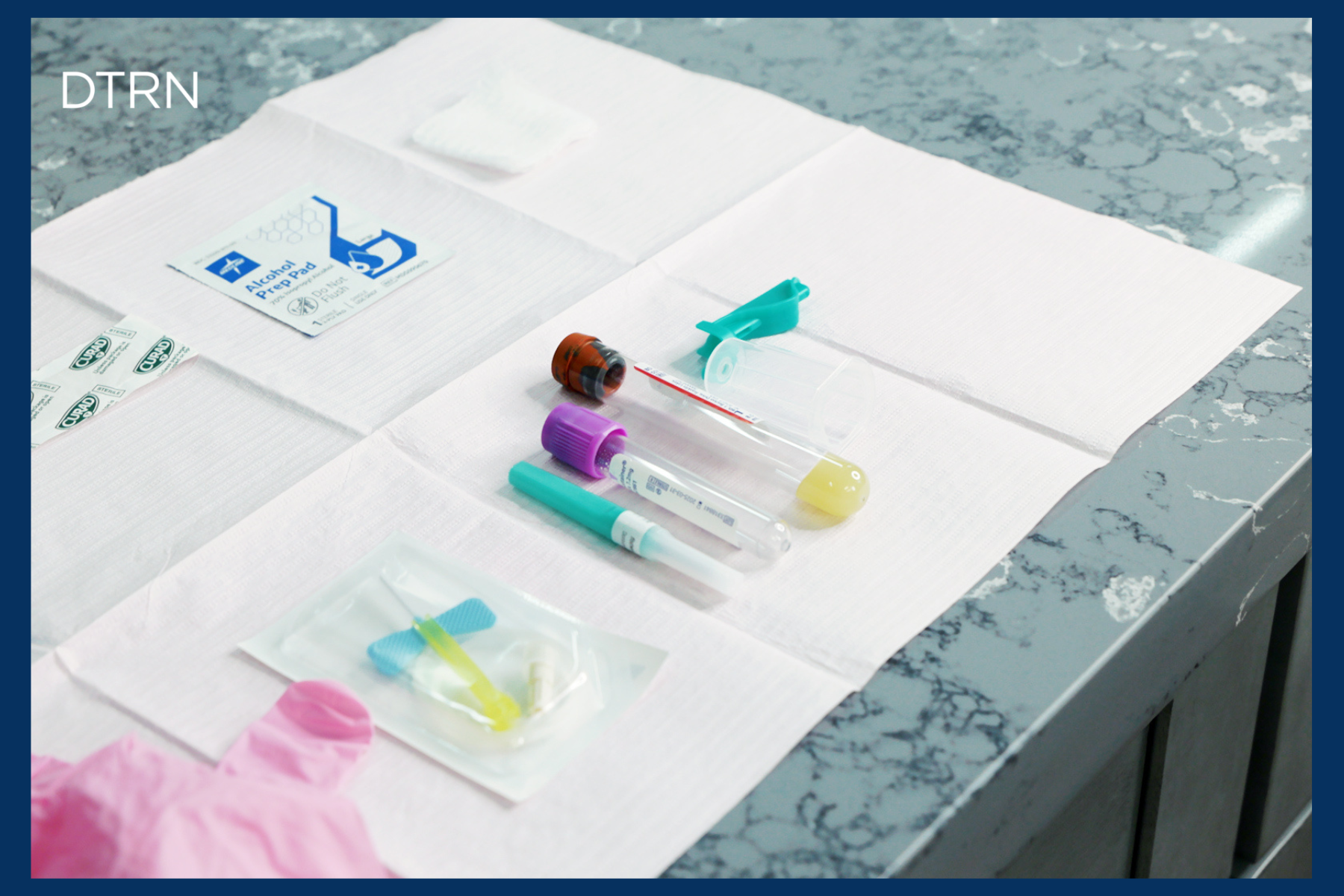
Expert Carie Moschitto, Nurse Practitioner and Injector at DermaTouch RN, San Antonio, shares what happens in the body after GLP-1 Weight Loss and what you can do about it.
You did the work. The weight is coming off, your clothes fit differently, and the number on the scale finally shows your progress. So why does the mirror feel a step behind?
“So the number on the scale went down, but you still feel off,” says Carie Moschitto, Nurse Practitioner and Injector at DermaTouch RN in San Antonio. It’s something she hears all the time, especially from patients losing weight on GLP-1 medications. Your body changed quickly, and some parts of you need help catching up.
We sat down with Carie to talk about what really happens in your body and face after accelerated fat loss, why it happens, and what you can do about it. You don’t have to undo your progress. You can finish it well.
What Happens in Your Body During Accelerated Fat Loss?
A GLP-1 agonist, such as semaglutide or tirzepatide, mimics a hormone your body already makes. It helps regulate appetite and blood sugar and slows digestion, so you feel full sooner and stay full longer. For many patients, that means weight comes off faster than it ever has before.
That speed is the goal, and it’s also the challenge. Your skin, your collagen, and your facial fat pads adjust on their own timeline, and that timeline is much slower than a GLP-1 agonist.
Below the Neck: When Your Skin Can’t Keep Up
“As we lose weight, we want to see that volume reduction,” Carie explains, “but unfortunately, the skin a lot of times doesn’t have enough time to catch up with the weight loss and contract to maintain that smooth appearance.”
Skin that stretched over months or years doesn’t always bounce back once the fat beneath it is gone. Carie says that’s when patients start to notice “crepiness developing in the underarms, loose skin on the abdomen and the inner thighs above the knees,” often with less definition than they hoped for.
This isn’t unique to GLP-1 medications, either. “The same thing can happen after any kind of rapid weight loss, like after a pregnancy or surgery,” Carie says. If you’ve lost weight quickly for any reason, what you’re seeing is normal. It’s also treatable.
Fat Loss, Skin Quality and Muscle Tone Are Three Different Conversations
One of the most important things Carie wants patients to understand is that “feeling off” after weight loss rarely comes down to a single issue.
“Fat loss, skin quality and muscle tone are all different conversations, and we handle all of them,” she says.
Stubborn pockets of fat that hang on after weight loss call for one approach. Loose or crepey skin calls for another, and so does a lack of tone or definition. At DermaTouch RN, “we offer a variety of options to help address these concerns,” Carie says, “ranging from topical products to collagen induction therapies and fillers that can be used for collagen stimulation as well.”
You Lost Weight, So Why Does Your Face Look So Different?
If you’ve noticed your face looking different since starting a GLP-1, you’re not imagining it. When weight comes off quickly, your face loses volume too.
“When we lose weight, you have some very similar volumetric changes as what occurs with the natural aging process,” Carie says. “So you not only have hollowing through the cheek area, temples, and sagging, but you also have additional things like thinning and sagging of the skin that develops as well.”
The fat pads that give your cheeks structure and lift begin to shrink. The result can be a face that looks hollow, older, or more tired than you feel, even when your body is exactly where you want it to be.
Loss of Facial Volume Causes: Aging, Accelerated
So why does this happen? The causes behind facial volume loss aren’t new. Speed is what’s new.
“It’s a combination of the natural aging process, which is usually a very gradual loss of volume,” Carie explains, “but with weight loss, that really rapid volume loss accelerates things dramatically.”
Under normal circumstances, your face loses volume and collagen slowly, over decades. Accelerated fat loss squeezes some of that change into months. Your face is following the same path it always would have, only much faster.
How to Restore Facial Volume After GLP-1 Weight Loss
The good news, according to Carie, is that the goal is never to reverse your weight loss. It’s to restore the support your face lost along the way, and there are several ways to do that.
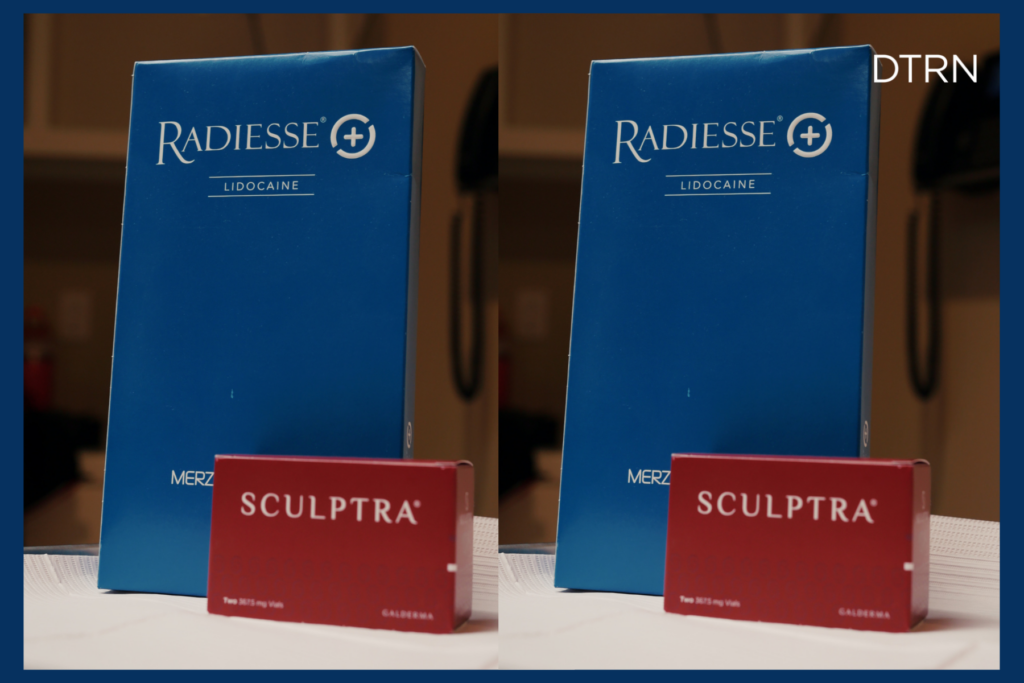
Dermal fillers. Hyaluronic acid (HA) dermal fillers, like Juvederm or Restylane, can restore volume where your face needs it most, such as the cheeks and temples. “Fillers can help support the tissue to reduce some of those natural processes,” Carie says.
Biostimulators. Some fillers do more than add volume. Biostimulators encourage your body to build its own collagen over time, gradually improving structure and skin quality naturally.
Collagen induction therapy. “There are treatments that help stimulate collagen with devices like our Sofwave and microneedling treatment,” Carie says. These treatments target the thinning and laxity that come along with volume loss, helping skin look firmer and smoother.
“We have a lot of options to choose from,” Carie adds, “including HA fillers, as well as biostimulators and collagen induction therapy.” Your plan depends on what your face and skin need, and often the best results come from combining approaches.
Don’t Forget Your Skin Care
In-office treatments make the biggest difference, but your daily skin care routine also helps to maintain those results between treatments. Medical-grade products like SkinMedica and ZO Skin Health can improve your skin’s quality, texture, and firmness between visits, which is especially important as your skin adjusts to your new shape.
Ready to Discuss Your Options?
Losing weight is a big accomplishment. If your skin, your shape, or your face hasn’t caught up with the scale, that isn’t a setback. It’s what you focus on next.
As Carie puts it, “Your face changed with your body, and we can work on that.”
Ready to talk about your options? Schedule a consultation online or call 281-720-8682 for our Houston office or 210-514-5788 for our San Antonio office and our team will help you build a plan to help you finish well.
Want to learn more about how GLP-1 medications affect your face? Read our post on How to Stimulate Collagen Production vs. Chasing Volume After GLP-1 Weight Loss
Stay up to date on industry trends and DermaTouch RN news and specials by subscribing to our newsletter today! And follow @bodybydtrn and @dermatouch_rn_ on Instagram or @dermatouchrn on Facebook for real results and expert tips.

DermaTouch RN offers minimally invasive and non-invasive treatments for men and women in Houston, San Antonio, Spring and Cypress, as well as the surrounding areas of Texas. We are the largest aesthetic practice in the Houston area, and all of our medical spa treatments are performed by a team of nurse practitioners, registered nurses, and aestheticians who receive continuing education to remain abreast of emerging treatments that benefit our patients. We invite you to learn more about our office before your consultation.

